Loading
Petar T. · Launching soon
Valiio
Multi-tenant HR and payroll platform where Serbian labour law is enforced computation, not a settings field: statutory pay floors, rest limits and leave rules recalculated on every payroll run.
Web designDevelopmentBrandingPrintSocialVideo
Drawn2026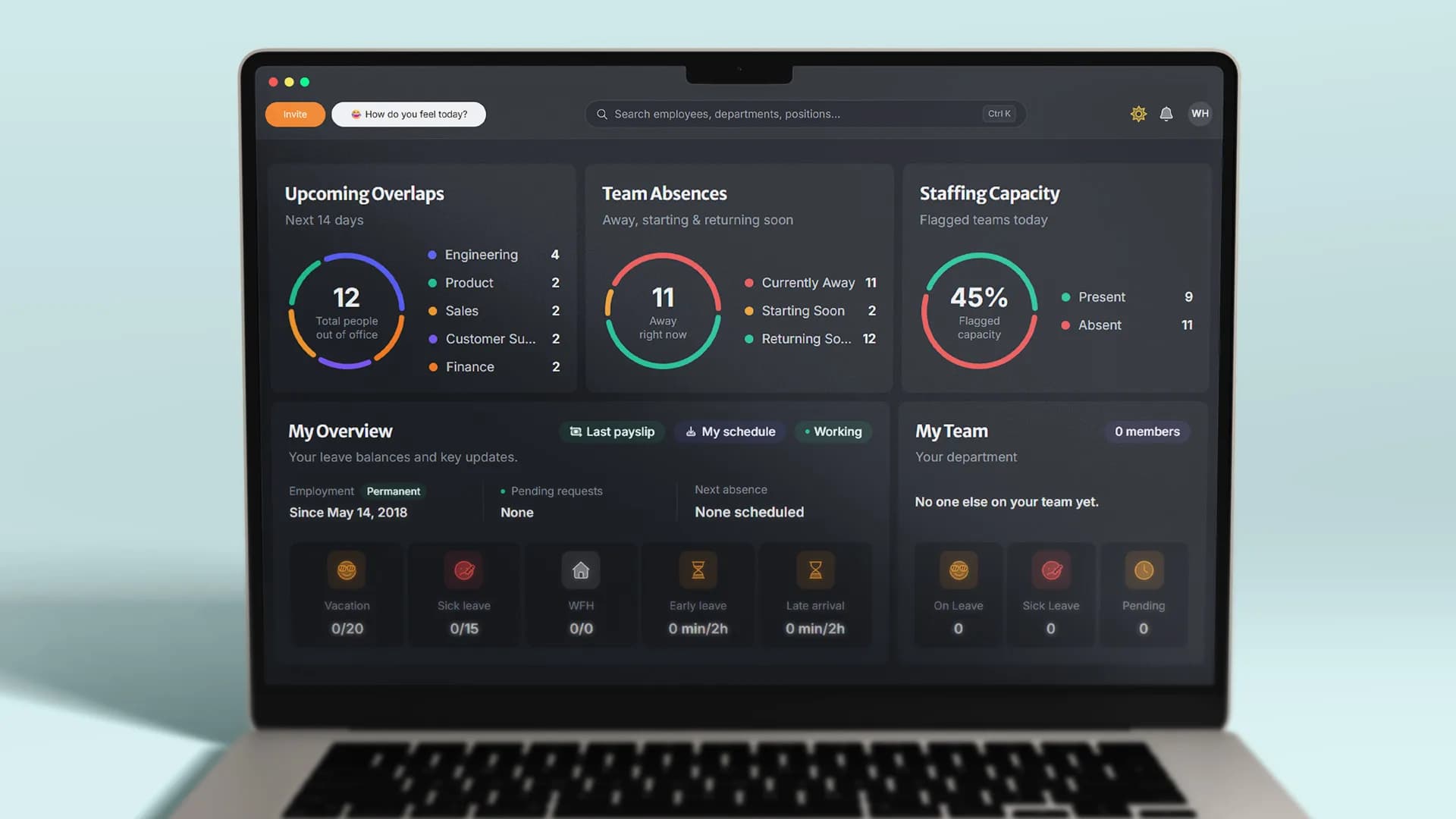
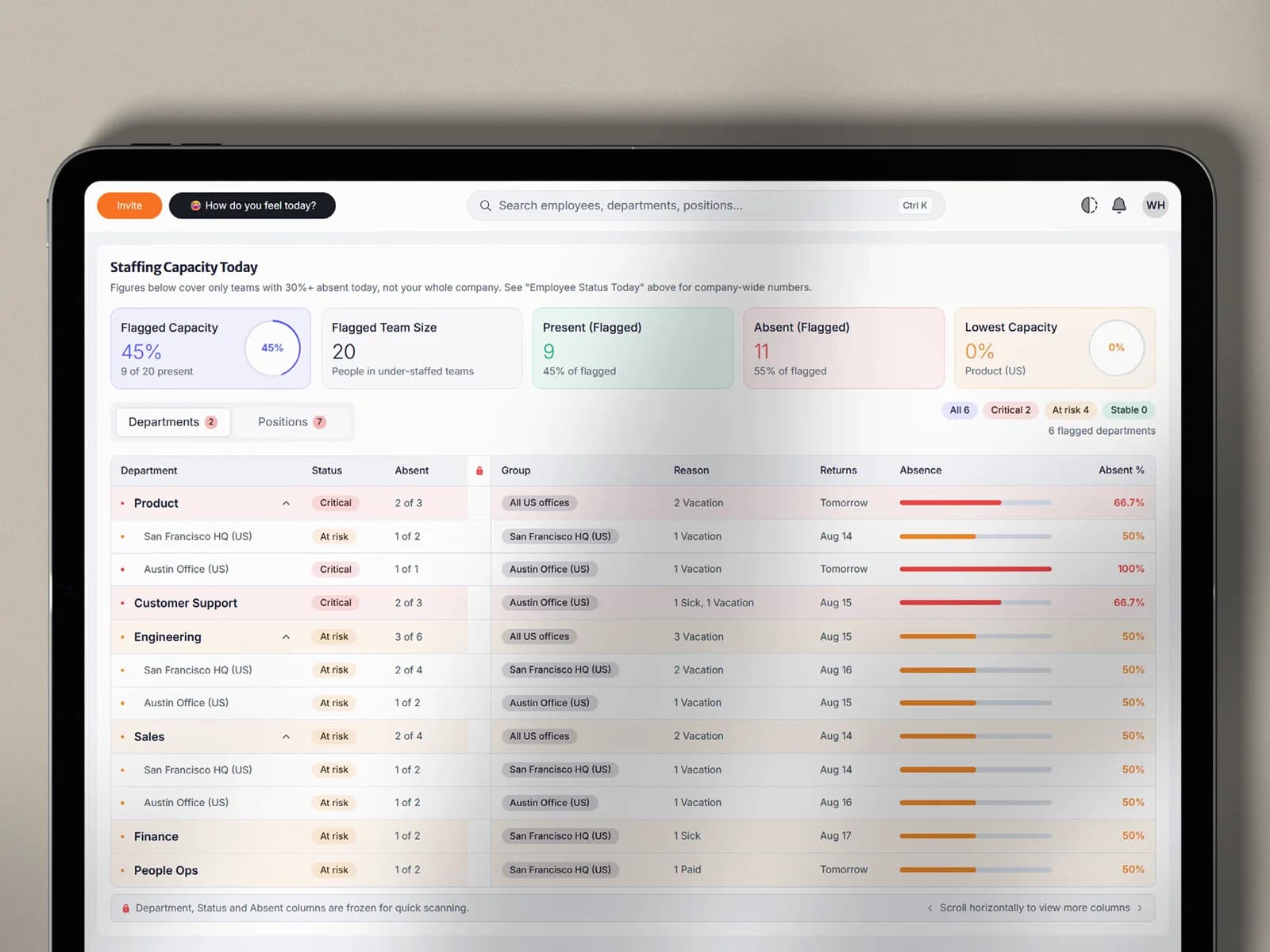
The product runs a company's people operations end to end. Employees, departments, positions and offices sit across multiple countries inside a single tenant, with an org chart and approval chains derived from real department management rather than from a separate permissions table. Company policy resolves through four tiers, from company to country to office to individual, so a rule can be set once and narrowed wherever reality demands it. That single mechanism governs holiday entitlement, sick pay, overtime rules, currency and salary basis alike.
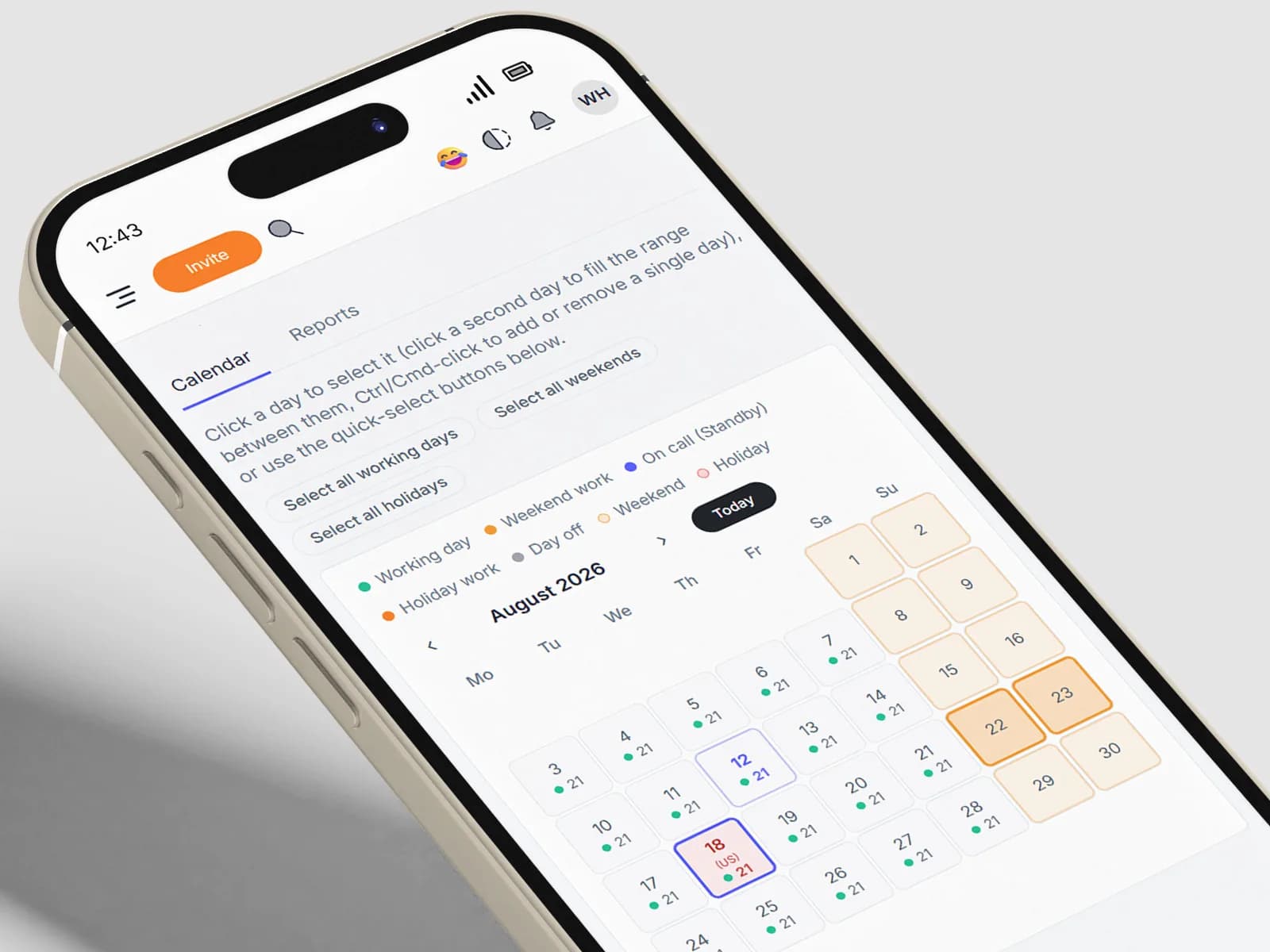
Day to day, it handles rostering with named shifts and bulk assignment, clock-in time tracking, leave requests routed through genuine approval chains with balances deducted in working days, and certified sick leave with medical documentation and extensions. Payroll turns all of that into money: gross-to-net with contributions and income tax, premiums for weekend, holiday, night, overtime, on-call and shift work, seniority pay, meal and holiday allowances, split instalments, month-end confirmation that freezes a period, payslip PDFs and spreadsheet export. Around that core sit expenses with hierarchical budgets, asset and equipment tracking, performance reviews, job postings with a public careers page, document management and company events.
The domain depth is the interesting part. Statutory limits are implemented as computed floors and hard refusals rather than as advisory text. A roster that would breach the twelve-hour day or the forty-eight-hour week is rejected at the moment it is written, which is the only moment the violation is still free to fix, and the daily and weekly rest periods behave the same way. Illness interrupts annual leave and returns the days to the employee's balance. Unused leave carries to the following June only above the two continuous weeks the law obliges an employee to take within the year. Vacation and sick pay are priced off twelve-month trailing averages. Fixed-term employment is measured across an entire contract history, bridging gaps shorter than thirty days, because that chain of short renewals is precisely the arrangement the statute exists to prevent and a system holding only the current contract cannot see it. Maternity leave costs the employer nothing, since the state is the paymaster. A company that enables the Serbian framework and changes nothing else is already compliant, because the 2026 statutory rates, contribution bases and thresholds are the schema defaults.
For companies outside that jurisdiction the entire HR side behaves identically while payroll reports gross figures only. No tax engine is invented for a legal system the product does not model, and the distinction is enforced rather than assumed: applying a Serbian floor to a Dutch office would be as wrong as failing to apply it to a Serbian one, and both directions are covered by tests.
Engineering-wise the system carries just over 2,300 automated tests, and the discipline behind them matters more than the count. Every rule of consequence was verified by deliberately breaking it and confirming the suite caught the break, which repeatedly exposed tests that were passing for the wrong reason. One night-shift premium test looked green for a full day because a mistyped policy field meant the configured value was silently ignored and a schema default happened to equal the statutory floor. Green is not proof; a test only counts once it has been shown to fail.